
irene.brandt@ulb.be
Adresse courrier :
ULB - Campus du Solbosch
Avenue F.D. Roosevelt, 50 - CP 124
1050 Bruxelles
Adresse visiteur :
Bâtiment S, 11è étage - Bureau : S11.117
Avenue Jeanne, 44
1050 Bruxelles
Bio
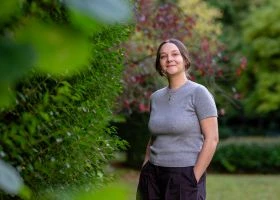
Irène Brandt is a doctoral student in political science at Université libre de Bruxelles (ULB), within CEVIPOL. Her research focuses on European governance of the just transition, with a particular focus on one specific instrument: the Territorial Just Transition Plans (TJTPs), which underpin access to the Just Transition Fund. Her doctoral project examines the extent to which these plans, developed in Germany, Belgium and France, could illustrate a new European model of economic, environmental and social governance by combining binding planning with territorial specificities.
CV
- Since October 2026: Doctoral Student, Université libre de Bruxelles, CEVIPOL
- September 2026: Research Assistant, “Empowering consumers for the ecological transition in ASEAN and Europe”, SciencesPo Paris, LIEPP
- October 2025 – July 2026: Research Assistant, “EUJUST. Analysing the ideas and instruments of the European Union's ‘just transition’” (FNRS PDR), Université libre de Bruxelles, CEVIPOL
- 2023 – 2025: Master’s Degree in European Studies, Institute for European Studies of the Université libre de Bruxelles (IEE-ULB)
Areas of research
- European Integration
- Just Transition
- European Governance (economic, environmental and social)